
Looking for answers? You’re in the right place.
Learn More About Our Dedicated Team’s Approach to Drilling and Blasting
Working with a drilling and blasting contractor often comes with questions, especially when projects involve complex rock conditions. Below are answers to some of the most common questions about Trinity’s services, capabilities, and approach.
- Answers to Services and Capabilities Questions
- Answers to Project Approach Questions
- Answers to Logistics and Expectations Questions
Rather talk through the details of your project? Get in touch with us today!
Services and Capabilities
What services does Trinity Drilling and Blasting provide?
Trinity provides drilling, blasting, and mechanical rock removal services for construction, quarry, and mining projects. These services are often used together to support safe and efficient rock removal based on site conditions.
Where does Trinity work?
Trinity supports projects within a defined core service area and can expand based on the type of work, project needs, and availability.
- For blasting services, our core service area includes South Central and Southeastern Pennsylvania, Northern Maryland, and Northern Delaware—regions where our team maintains a strong presence and works regularly with local contractors, quarries, and permitting agencies.
- For drilling and mechanical rock removal, Trinity operates across a broader footprint, with an extended service area that includes all of Pennsylvania, Maryland, West Virginia, Delaware, and New Jersey.
This flexibility allows our team to support a wide range of projects while maintaining the regional experience and coordination needed for safe, efficient work.
Does Trinity perform compaction grouting or soil sampling?
No. While the Trinity team provides drilling support for compaction grouting, we do not perform the grouting itself. Trinity does not perform geotechnical soil sampling.
Do you offer rock crushing services?
Not at this time. However, drilling and blasting methods can be adjusted to help reduce oversize material and support downstream processing for our partners in the quarry and mining industries.
When are mechanical rock removal methods used instead of blasting?
Mechanical methods are used when blasting is not feasible due to site constraints, proximity to structures and buried utilities, or regulatory limitations. These methods include hydraulic breaking, line drilling, and non-explosive techniques.
Project Approach
When should Trinity be involved in a project?
Ideally, Trinity is involved early in the planning process. Early engagement allows the team to review plans, assist in evaluating subsurface conditions, and identify potential challenges before they impact the schedule or cost.
Can Trinity help identify rock conditions before construction begins?
Yes. Trinity can perform rock probing and drilling to help evaluate subsurface conditions and better understand the type and extent of rock on a site.
How does Trinity handle complex or constrained job sites?
Trinity works closely with project teams to adapt drilling and blasting methods based on site conditions. This may include adjusting drilling patterns, using controlled blasting techniques, or recommending mechanical alternatives when needed.
Logistics and Expectations
Does Trinity supply its own materials and equipment?
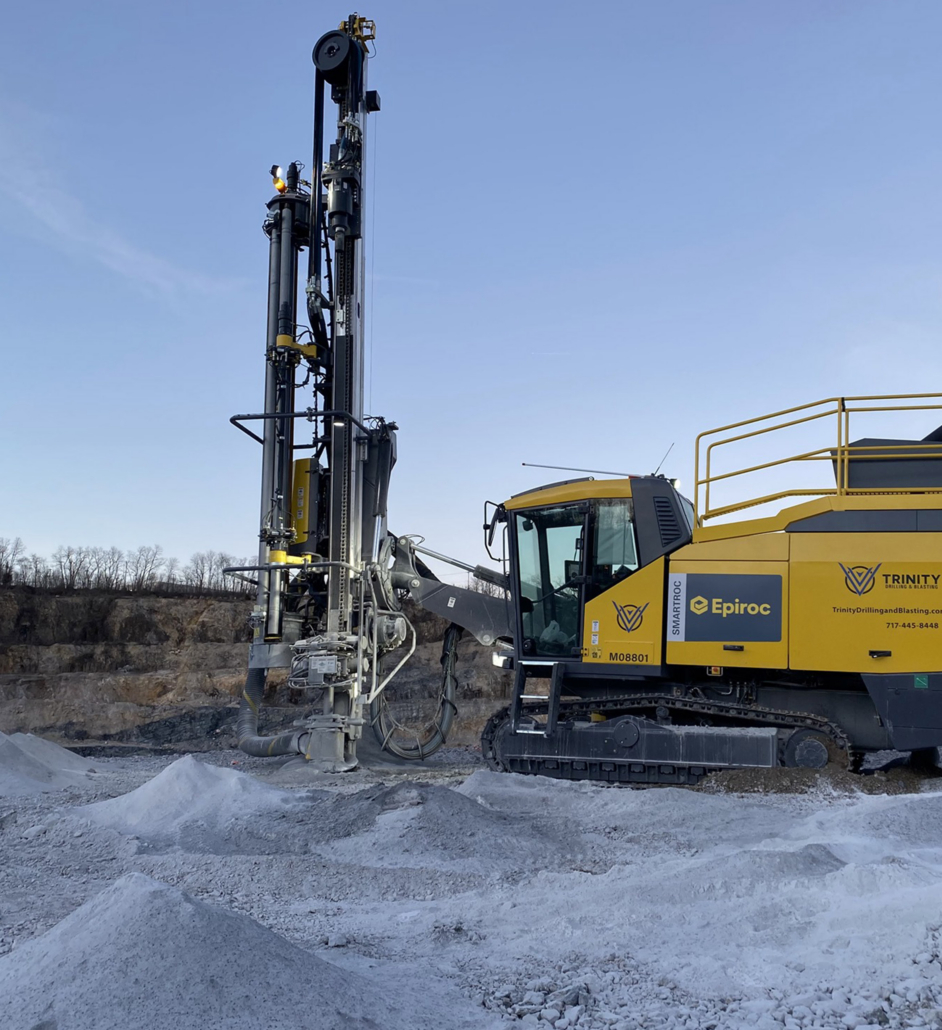
Yes. Trinity operates with extensive in-house capabilities, including an experienced team with the equipment, materials, and support resources needed to fulfill commitments.
What types of projects does Trinity typically support?
Trinity works across a wide range of project types, including site development, infrastructure, utility work, quarry operations, and mining applications.
How large of a project can Trinity handle?
Trinity supports projects of varying sizes, from a house basement to large-scale, schedule-driven operations that require a fleet of drills, adapting resources and approach based on project needs.
Have a Question About Your Project?
Every project is different, especially when rock conditions are involved. Contact Trinity today to explore how we can help manage and reduce the risks and challenges of rock, bringing our excellence in explosives to your site.